Ensuring that package maintainers in Bioconductor remain active and accountable is essential for the community's integrity. One of the primary challenges is that maintainer contact information often becomes outdated, leading to issues in policy adherence and communication.
Challenges of Outdated Information
Maintaining accurate contact information for package maintainers isn’t merely a bureaucratic hurdle; it can significantly impact the functioning and reputation of the Bioconductor project. Bioconductor, which focuses on bioinformatics tools, relies heavily on collaboration and trust among its contributors. When maintainers aren't reachable or fail to comply with policies, it puts the quality and consistency of packages at risk. Projects stagnate when maintainers can’t be contacted for updates, bug fixes, or policy changes, creating a frustrating experience for users relying on these tools.
Innovations in Communication
To tackle this issue, the Bioconductor team has developed an application leveraging Amazon Simple Email Service (SES). This tool will periodically reach out to maintainers, verifying the contact information and reminding them to opt into the latest policies, procedures, and code of conduct. The aim is to ensure a reliable communication channel and facilitate a smoother compliance process each year.
This approach isn't without its critics. Some maintainers are concerned about receiving unsolicited emails, perceiving these communications as spam. Institutional email systems, often laden with filters, may amplify this issue, leading to important messages getting overlooked. Yet, this tool marks a step forward in promoting accountability, and it’s a necessary process given the complex dynamics within the community.
Access to Information
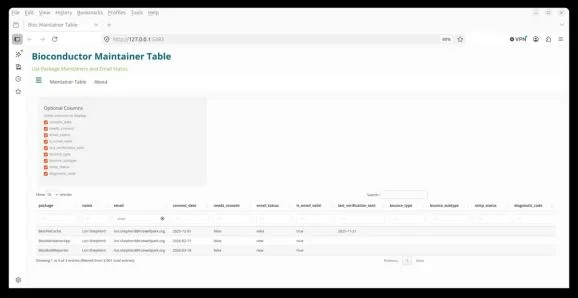
The data regarding maintainers is stored in a publicly accessible database. This transparency is intentional; it promotes accountability and instills confidence among users. Rather than connecting directly to the web service, users are encouraged to utilize the Bioconductor R package BiocMaintainerApp. This package provides a Shiny application interface, making it more user-friendly for querying information about package maintainers.
This level of access is significant. Transparency in the data allows users to know who is responsible for each package, potentially making it easier to reach out for support or collaboration. Such practices are essential, especially when users depend on these packages for crucial research activities. It’s not just about having the information; it’s about making it accessible and actionable for the community that relies on Bioconductor's offerings.
Ongoing Improvements and Community Engagement
The Bioconductor team thanks all maintainers for their cooperation as they adopt these new procedures, ensuring the community continues to thrive. This acknowledgment reflects an understanding of the collective effort required to keep projects like Bioconductor viable and useful. Yet, as the community looks forward, there’s an underlying expectation that these processes will evolve.
The situation calls for a more nuanced understanding of the developer-maintainer relationship. Many maintainers are volunteers, dedicating their time amid other commitments. As such, a simple email asking for updated contact information can feel burdensome rather than constructive. Tools that emphasize ease of use rather than demands for compliance are more likely to engender positive responses.
Implications and Future Outlook
What this means for you, especially if you're working in this space, is that the responsibilities of maintainers are becoming clearer, yet so are the supports available to them. While the initial outreach may have raised concerns, it’s a necessary evolution of how the community operates. The goal is not just to impose regulations but to create a culture of accountability and transparency that can adapt to the changing makeup of contributors.
Looking to the future, the Bioconductor team is already considering enhancements to this communication strategy. Alternative solutions, such as specialized access for maintainers, are on the horizon. This could manifest as a dedicated platform for maintainers to manage their information and commitments more effectively. Perhaps an interactive dashboard would simplify procedures, allowing maintainers to quickly verify their data without the cumbersome process of responding to emails each time policies change.
In the end, the core of these efforts revolves around improving the ecosystem that supports both users and contributors. As advances continue, you can expect Bioconductor to prioritize not just compliance—but also engagement. After all, engaged maintainers lead to robust and flourishing projects, enriching the field of bioinformatics as a whole. The early responses to this initiative will likely shape how future communication strategies are crafted.