In the world of R-universe, updates happen continuously, creating a challenge to identify specific release dates or feature rollouts. Rather than following the conventional model of a single launch event associated with traditional software, R-universe integrates ongoing improvements aimed at enhancing user experience steadily. This iterative approach lacks the fanfare associated with major updates but allows for incremental enhancements that can, over time, significantly affect users.
Recently, several noteworthy features have emerged that make R-universe faster, more visually engaging, and user-focused. Here's a closer look at five of these upgrades that stand out for their potential impact on how users interact with the platform.
1. Enhanced Social Media Cards
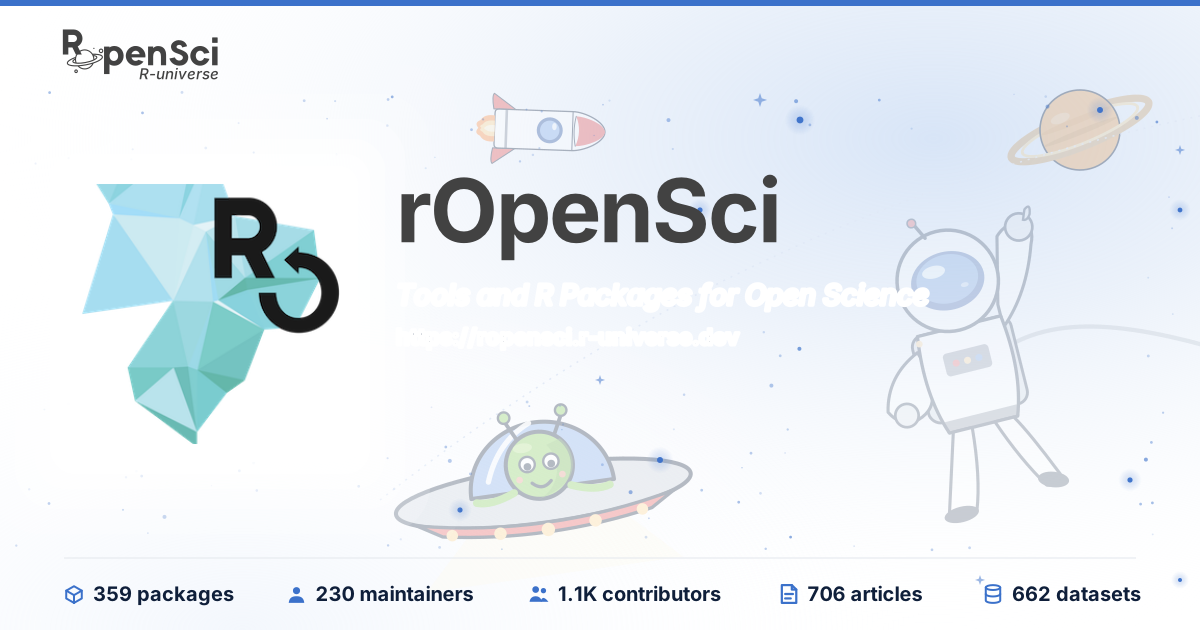
R-universe has revamped how packages are shared on social media by introducing visually striking preview cards for every package, article, and universe. This upgrade means that every time a link is shared, it doesn't just appear as a standardized URL but instead provides an appealing visual context and essential statistics captured in an engaging format:
With the new preview images, sharing links looks more polished, and R-universe also extracts document titles and section headings when a vignette is shared, leading to a more informative description for viewers. What’s clear here is that thoughtful design in shared media isn’t just about aesthetics; it fosters interaction and encourages sharing, which is essential in today’s content-driven environments.
R-universe now generates social media preview cards for each package, like this one: ropensci.r-universe.dev/targets. You can also get the card manually from the /{package}/card.png API (or svg).
— Jeroen Ooms (@jeroenooms.bsky.social) 12:01 · May 2, 2026
[image or embed]
Though these enhancements won't guarantee viral status, they undoubtedly enhance the aesthetics and functionality of shared content. That’s more significant than it looks at first blush, especially given the fierce competition for attention online.
2. Introduction of PACKAGES.rds Support
This latest feature zeroes in on backend improvements, enhancing the performance of package installations within R-universe and streamlining the package-building workflow. Through the introduction of a PACKAGES index file, R-universe now incorporates an RDS format, which leverages R's internal binary serialization for quicker performance. Previously, only a text-based format was supported, which while beneficial for server-side speed, was far from ideal for larger repositories.
You see, as repositories grow, storing and retrieving data efficiently becomes vital. The new PACKAGES.rds files are generated using a JavaScript implementation that mimics aspects of the R RDS serializer. On macOS and Windows, this includes default zstd compression, improving performance compared to traditional CRAN repositories dramatically.
3. Enhanced Search and Filter Features
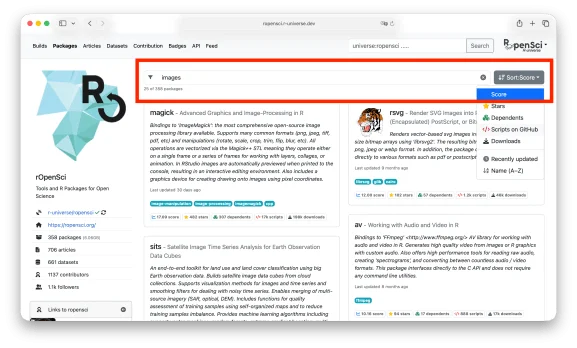
The user interface on universe-level pages has undergone significant upgrades with the introduction of interactive filter and sort capabilities. On the /packages page, users can now perform fuzzy searches based on keywords found within package tags, descriptions, and authors. The additional sorting options, based on popularity metrics like stars, downloads, and dependencies, provide users with more granular control over the search experience.
If you're working in this space, you know how frustrating it can be to wade through irrelevant results. These search functionalities extend across the /articles and /datasets pages as well, ultimately enhancing the usability of the platform. Without efficient search tools, even the most robust repositories can feel overwhelming.
4. Manual Sync for Immediate Updates
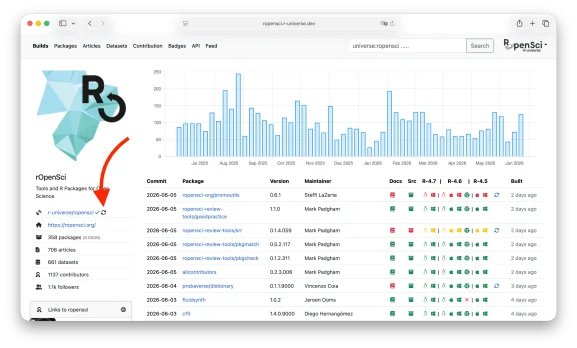
R-universe automatically syncs with upstream git repositories and package registries approximately every hour. However, for those who can't bear to wait, a manual sync button has been added to the universe sidebar. This option allows users to check for updates immediately after changes, such as commits or corrections, significantly increasing workflow efficiency.
This is particularly beneficial for developers and teams on tight schedules. You can suddenly speed up your debugging process or hasten the release of essential updates by merely clicking a button. And yet, one has to wonder—how often will users require this level of immediacy? The addition suggests a keen awareness of user demand for flexibility.
5. Simplified Access to Check Results
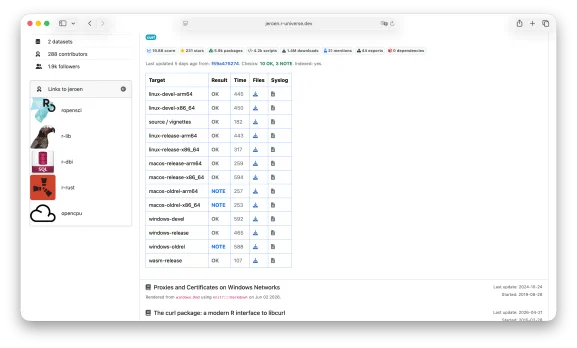
For many organizations using R-universe, package check access is vital. Recent updates have simplified the navigation to check results significantly. Package pages now feature direct links to check tables, such as in this Check Table Example. Furthermore, build logs and artifacts related to these checks can be downloaded without needing GitHub authentication, broadening accessibility immeasurably.
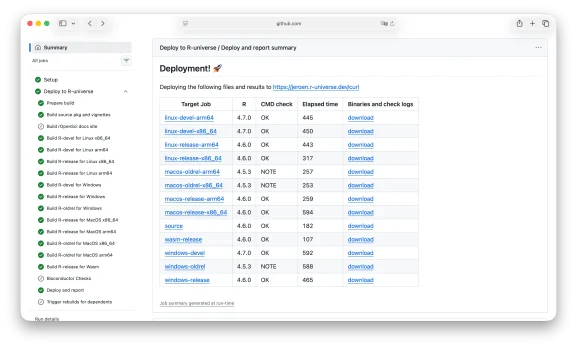
The builds now also include a deployment summary enabled by GitHub Actions Job Summaries. This summary highlights what was deployed during specific runs, allowing users to inspect and verify build outcomes directly from GitHub, thereby reducing the need for navigating multiple sources for project tracking. This is not just a convenience feature; it’s a necessary tool for teams that prioritize rapid iteration and deployment.
Implications and Future Outlook
Looking ahead, these advancements in R-universe paint a picture of a platform that is striving for improved user engagement and operational efficiency. They reflect an acute awareness of user needs—be it through enhanced visual communication via social media cards or streamlined backend functionalities like PACKAGES.rds support. This evolution signals that R-universe isn't static; it aims to nurture a dynamic ecosystem for data science and analytics.
The continuous updates offer a glimpse of how the platform might evolve further. Will R-universe continue on this path of frequent enhancements? What features might emerge to meet changing user demands? As the data analytics community grows and diversifies, adaptation becomes not just an advantage but a necessity. Keeping pace with user needs could very well define R-universe’s trajectory in the competitive environment of data science tools.