HashiCorp has been actively refining Terraform's capabilities to help organizations address infrastructure challenges and enhance security practices. The latest updates to HCP Terraform and Terraform Enterprise focus on providing actionable insights, easing management burdens, and boosting security protocols. The new features include:
- Billable resource analytics (generally available)
- Project-level remote state sharing (generally available)
- Module testing for dynamic credentials (generally available)
- Project-level notifications (generally available)
- Registry tagging (in public beta)
Billable Resource Analytics
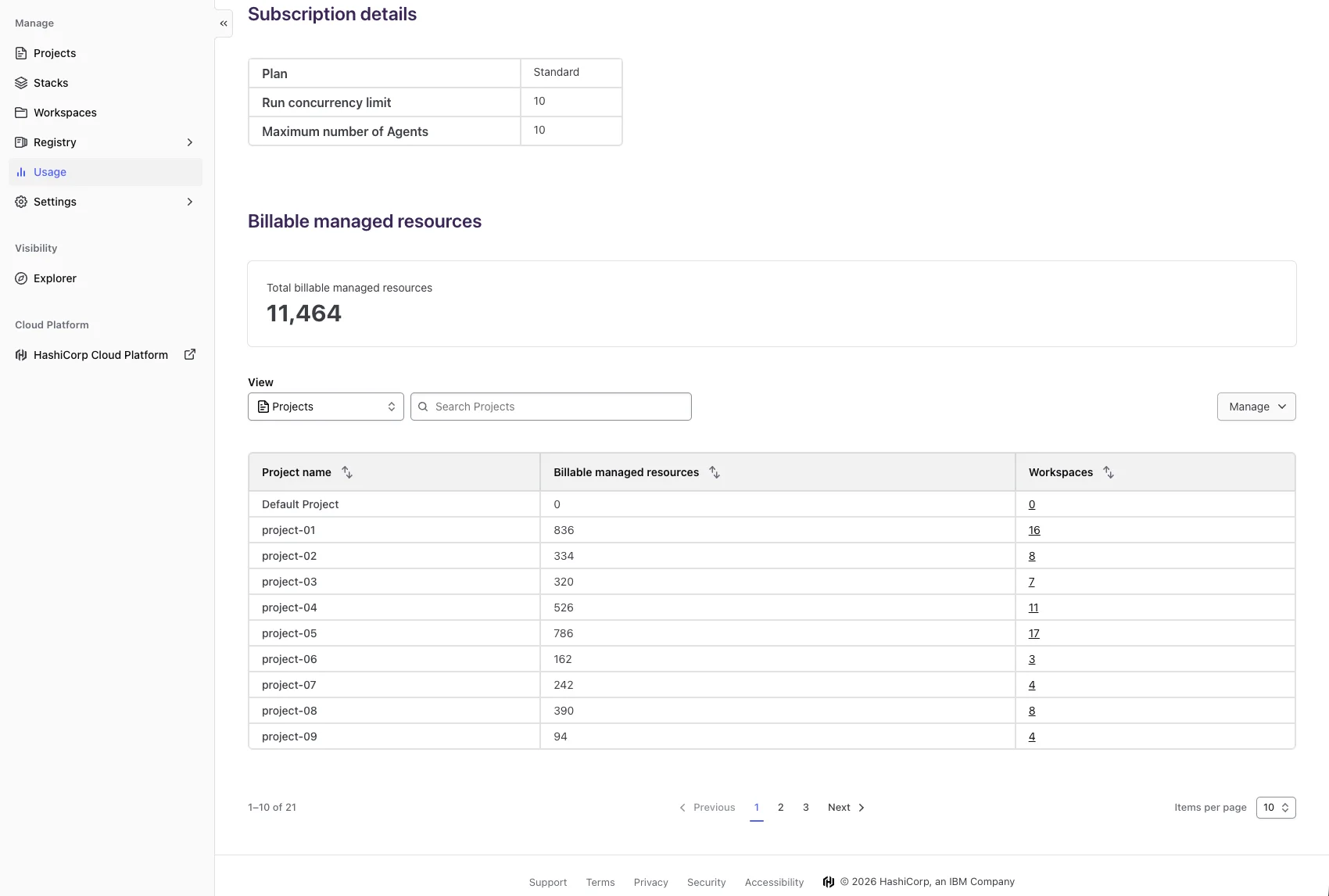
The Issue: Many organizations struggle to gain visibility into their infrastructure costs, particularly when utilizing resources under management (RUM)-based billing. Previously, users had minimal insight into how resources were being consumed, which often resulted in unforeseen expenses and inefficient budgeting.
What’s New: The introduction of billable resource analytics transforms this process, allowing users to dissect their resource consumption by project and workspace. This feature provides an at-a-glance view of where costs are accruing across the organization. Users can now independently access critical data through a self-service portal, helping them take prompt actions on cost-cutting measures.
Key Benefits:
- Cost Management: Users can proactively address spending and resource allocation, keeping budgets aligned with consumption patterns.
- Data-Driven Insights: Organizations can make informed investments based on concrete usage data rather than speculation.
Those on a paid HCP Terraform plan can now explore these analytics directly on the usage page.
Project-Level Remote State Sharing
The Challenge: Sharing state data across workspaces has been a double-edged sword for platform teams, with existing solutions either exposing sensitive data too broadly or requiring manual, error-prone management skills.
What’s New: A new feature allows sharing state data within a project, allowing workspaces to access resources dynamically. This refinement simplifies security measures and enhances the operational efficiency of infrastructure management.
Benefits Include:
- Improved Security: Enforcing strict data boundaries ensures teams only access essential configurations.
- Operational Efficiency: Reduces management time by automating access controls within project scopes.
To facilitate enhanced governance, organizations are encouraged to use the tfe_outputs data source for accessing remote state outputs securely.
Project-Level Notifications
The Problem: Operational challenges arise when organizations need to set up alerts across multiple workspaces, leading to potential oversight and unnoticed failures.
What's New: The rollout of project-level notifications provides a centralized approach to monitoring, allowing alert configurations to cascade automatically to all workspaces within the project. Hence, if a workspace is created or modified, alerts adjust accordingly without the need for repetitive setups.
Benefits:
- Increased Reliability: Establishing a baseline for alerts guarantees consistent observability across the infrastructure.
- Efficiency Scaling: Reduces labor and complexity in incident management, allowing teams to focus on critical tasks.
For comprehensive alert management, detailed documentation is available for setup.
Module Testing for Dynamic Credentials
The Gap: A disconnect between deployment processes and secure testing has made it complicated to configure reliable tests, often resulting in developers using insecure static credentials.
What’s Changing: Terraform now supports dynamic credentials within its testing framework, enabling a secure testing environment that mirrors production processes. Developers can enjoy a more straightforward workflow, relying on OIDC tokens for short-lived credentials.
Advantages:
- Unified Security: Employing consistent authentication methods throughout the testing and deployment cycle enhances security.
- Reduced Complexity: Facilitates effortless integration testing without cumbersome key management processes.
Registry Tagging
The Requirement: Previously, tagging was limited to project organization, making it challenging to manage registry artifacts effectively.
What’s New: The introduction of registry tagging allows platform teams to annotate modules and provider artifacts, enhancing the clarity and usage tracking for downstream consumers. This feature is now in public beta.
Key Benefits:
- Enhanced Security: Easier identification of approved artifact versions reduces risks from deploying inappropriate configurations.
- Operational Efficiency: Speeds up artifact discovery, aligning them with project tags to facilitate easier access.
Getting Started
Many of these features are already accessible. For new users interested in exploring Terraform, a complimentary HCP account comes with a $500 credit to test various offerings. More tutorials are available for onboarding and effective use of Terraform’s capabilities.