In May 2026, Insikt Group® reported a significant rise in high-risk vulnerabilities, identifying 41 critical issues demanding immediate remediation. This marks an 11% increase from April, highlighting not just raw numbers but a troubling trend that may signal deeper systemic issues within cybersecurity infrastructures. Organizations now face more than just the typical ups and downs of threat activity; they’re grappling with a growing spectrum of vulnerabilities that could lead to catastrophic breaches if not addressed swiftly.
These vulnerabilities, affecting products across 20 different vendors, were headline grabbers for their potential impact. The extent of the exposure encompasses a considerable range of sectors, turning the spotlight on various software products that organizations rely on. Of the identified vulnerabilities, 21 were listed in the US Cybersecurity and Infrastructure Security Agency (CISA) Known Exploited Vulnerabilities (KEV) catalog, 19 emerged from honeypot data, and one was disclosed by a security vendor. This variety of sources indicates a dynamic environment where threats are not static, and new exploit vectors are continuously emerging.
Vulnerability Breakdown
Vercel emerged as the most affected vendor, accounting for about 27% of the reported vulnerabilities, linked primarily to Next.js activities observed through honeypot data. The concentration of vulnerabilities within one vendor raises alarms about the potential fallout, as companies often underestimate the interdependencies and risks tied to popular frameworks like Next.js. Other categories of affected software included enterprise software, security products, networking tools, and cloud services, spotlighting a diverse array of technologies exposed to exploitation.
Active Exploits and Public Proofs of Concept
Among the 41 reported vulnerabilities, 12 allowed for remote code execution (RCE), impacting eight notable vendors such as Microsoft and Adobe. These vulnerabilities are particularly alarming, as RCE can let attackers gain complete control over compromised systems. However, what stands out is that 32 of these vulnerabilities had public proof-of-concept (PoC) exploits available. This access poses a heightened risk since it not only simplifies the exploitation process for cybercriminals but also raises the stakes for organizations that might be reluctant to patch systems due to operational concerns. (and this is the part most people overlook)
Significant vulnerabilities identified this month were often tied to longstanding issues, with five of the top vulnerabilities dating back to 2008-2010. This persistence illustrates the difficulty organizations face in timely remediation of known vulnerabilities. The urgency is underscored by the fact that the fastest time from disclosure to exploitation was less than a day, indicating that attackers are adept at identifying and acting on weaknesses before organizations can adequately respond.
Highlighting Active Threats
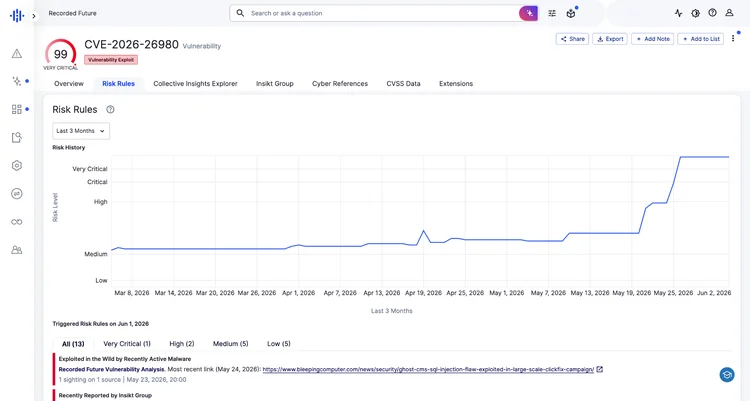
Among the critical vulnerabilities, CVE-2026-26980 associated with Ghost CMS stood out. XLab published an analysis on May 21, detailing how this SQL injection vulnerability was exploited in large-scale ClickFix and FakeCaptcha campaigns targeting various sectors, including finance and AI. By compromising Ghost CMS installations, attackers injected malicious JavaScript to redirect users and deliver payloads under misleading initiatives, complicating the threat landscape.
The vulnerability allows unauthorized access to Ghost Admin API Keys, facilitating unauthorized modifications to website content. In the exploitation campaigns, two major threat groups successfully used this vulnerability against over 700 instances of Ghost CMS, showing the extensive reach and risk associated with unpatched systems. This incident serves as a warning that the implications of leaving vulnerabilities unaddressed can ripple across industries and sectors.
Insikt Group also obtained samples of a malicious payload involved in these attacks named UtilifySetup.exe. Technical analysis revealed a range of harmful activities, including DLL injections, file drops, and various forms of system enumeration. This particular sample showcased evasion techniques and was designed to execute on system login, extending its reach and potential damage. It’s a stark reminder that modern cyber threats don’t just rely on exploiting known flaws; they’re also evolving to incorporate sophisticated tactics.
Key Trends in Cyber Exploitation
This month’s data highlighted several pivotal trends that organizations can’t afford to ignore:
- ClickFix and FakeCaptcha campaigns exploited outdated vulnerabilities, with threat actors capitalizing on minor lapses in security hygiene. It's increasingly apparent that attackers notice and take advantage of seemingly small oversights.
- The most prevalent vulnerabilities observed included CWE-79 (Cross-site Scripting), CWE-506 (Embedded Malicious Code), and CWE-89 (SQL Injection). These aren’t just technical terms; they represent real risks to organizations' digital footprints and data integrity.
- Many teams still struggle with keeping systems updated, as evidenced by the discovery of older vulnerabilities in the current exploits. This highlights a gap in operational readiness that organizations need to address urgently.
The Path Forward
The May 2026 report serves as a stark reminder for organizations to prioritize their cybersecurity efforts. The data reflects an urgent need for patches to be implemented promptly, especially given the recency of exploit revelations surrounding long-standing vulnerabilities. As cybercriminals continue to exploit these weaknesses, investing in updated security measures and training for teams is essential to mitigate risks. If you're working in this space, the lack of action could have severe repercussions for your organization's infrastructure.
Organizations must embrace a proactive stance in vulnerability management, reviewing existing systems, and paying closer attention to the nuances of threat intelligence resources to stay ahead of emerging dangers. The expansion of public PoC exploits combined with the increasing sophistication of threat campaigns should compel entities to take a hard look at their security posture.
For those relying on products among the highlighted vulnerabilities, immediate action is necessary to ensure systems are fortified against what appears to be an aggressively escalating trend in cyber exploitation. The path to resilience lies in not just understanding these vulnerabilities but acting decisively to combat them.