Recorded Future has unveiled its AI Alert Filtering feature, designed to streamline how analysts manage incoming alerts by automatically assessing their relevance. This approach allows for quicker prioritization without sacrificing user control over significant intelligence data.
The increasing volume of alerts is a pressing challenge for security analysts, especially as cybercriminals now wield AI to exploit vulnerabilities and escalate phishing efforts. Recorded Future leverages this same technological edge to combat the saturation, effectively automating the initial evaluation of alerts to ensure that analysts focus on what's truly important.
Enhancing Alert Management
Using Recorded Future AI, the new feature conducts a preliminary sort of alerts, utilizing the Intelligence Graph® to provide contextual insights. This ensures that classifications are made with a comprehensive understanding of the threats represented, not merely based on keywords or phrases. Implementing such a system has the potential to greatly reduce cognitive overload for cybersecurity professionals who are already inundated with information.
Key Features of AI Alert Filtering
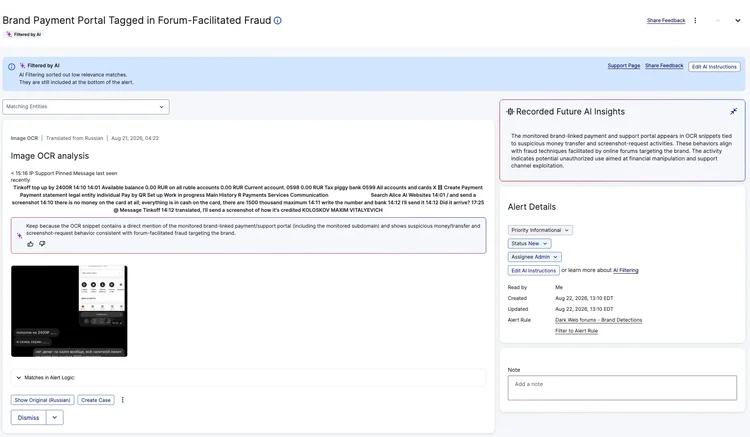
- Relevance Classification: Alerts are categorized into High and Low Relevance segments, allowing analysts to address the most significant threats first while retaining access to the full spectrum of alerts if needed. This feature is essential for organizations that deal with multiple alerts daily, as it optimizes time management and resource allocation.
- Instant Summaries: Each alert comes equipped with a summarization of its content, enabling analysts to quickly ascertain its importance and decide on subsequent actions. In practice, this means that analysts can move from alert to alert with minimal delay, ensuring that time is allocated efficiently to threats that warrant immediate attention.
- Customizable Prioritization: Users can tailor the AI's focus according to specific needs—differentiating between intents such as "This is for ACME Bank, not ACME Center"—without the hassle of rewriting existing rules. Personalization in alert management speaks to the varying needs across organizations and the different types of threats they face, which can differ dramatically by industry.
- Smart Dismissal: Alerts devoid of relevant references can be set to auto-dismiss, reducing clutter while keeping detailed records accessible for later review. In an age where cybersecurity teams often manage thousands of alerts daily, this feature could be a game-changer in maintaining focus on critical events.
- No Loss of Original Data: The filtering process modifies what analysts see first but does not alter the original alert data, ensuring the untouched details remain available in the portal. This dual-layered approach means analysts can act swiftly without losing access to the underlying data that may provide context for future investigations.
Implications for Analysts and Organizations
The introduction of AI Alert Filtering reflects a significant shift in how security operations are handled. With increasing reliance on AI technologies by both defenders and attackers, automating the threat assessment process is more than just a convenience; it’s a necessity. This tool could not only help organizations mitigate risk but potentially save them from the fallout of delayed responses.
What this means for you, if you’re working in this space, is that the integration of such features can enhance operational efficiency. However, there's also a caveat: while automation promises to reduce manual workload, it requires ongoing vigilance to ensure no critical alerts slip through the cracks. The balance between human intuition and machine processing is delicate.
There's an aspect that's often overlooked in discussions about AI in security settings: the human factor. While AI can handle initial sorting and filtering, analysts must still apply their judgment when investigating alerts. The risk lies in potential over-reliance on automated systems—contextual understanding still matters.
In light of this, organizations should consider not just adopting AI technologies like Recorded Future’s filtering system but also ensuring their analysts are well-trained to interpret the alerts effectively. If human analysts can cultivate their skills in tandem with AI tools, the combination could enhance their overall capabilities in combating sophisticated cyber threats.
Looking ahead, as cyber threats continue to evolve, it’s clear that automation will play an increasingly vital role. AI systems will only get better at analyzing trends and predicting potential threats. Yet, with this advancement comes the ethical considerations of trust. Users must remain skeptical of fully automated responses and ensure there's always an element of human oversight, especially when significant decisions depend on the inferred relevance of alerts.
So, will this AI Alert Filtering be a boon for analysts, or will it lead to an overreliance on automated systems? That remains to be seen. However, it certainly holds the potential to change the dynamics of alert management and could mark a pivotal step toward streamlining security operations in an era of heightened cyber warfare.