Understanding Malware Trends in H1 2026
As we process the insights from the first half of 2026, one notable aspect stands out: the ongoing trend of threat actors exploiting trusted tools and platforms within both corporate and consumer environments. Attackers have shown a strong preference for integrating their malicious activities into common workflows, making the detection of nefarious actions increasingly complex. This focus on blending in with legitimate activity presents significant challenges for cybersecurity professionals, necessitating proactive exposure management and rigorous credential governance.
AI's Role in Cyber Threats
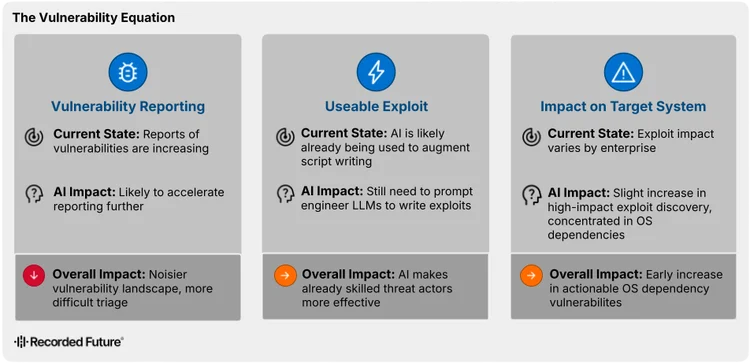
While the presence of AI in cybercrime has gained attention, the reality in H1 2026 indicates that its use remains primarily an enhancement to existing tactics rather than a complete overhaul towards automated attacks. AI has facilitated a surge in the number of vulnerability reports, attributed to advancements in research methodologies. This trend exemplifies how AI can accelerate the pace of exploit-path analysis, giving skilled attackers the tools to identify and capitalize on weaknesses faster than before. Yet, while AI's status in malware operations is growing, most tactics still rely on conventional methodologies, highlighting a hybrid approach to intrusions.
Exploited Vulnerabilities Overview
The vulnerability exploitation landscape has become notably broader, with the Insikt Group reporting a dramatic rise in actively exploited vulnerabilities—215 confirmed in H1 2026, which marks a 34% increase from the previous year. Particularly alarming is the fact that many of these vulnerabilities, including those allowing remote code execution, can be accessed without prior authentication. This trend underscores a growing risk profile for organizations, emphasizing the urgent need to focus on vulnerabilities linked to remote exploitation capabilities.
Patterns of Malware Activity
Among the malware strains making waves during the first half of 2026, Remote Access Trojans (RATs) were prominent, with AsyncRAT emerging as a key player. Threat actors consistently reused established playbooks across a range of exploits, signifying a reliance on familiar techniques rather than the introduction of novel strategies. This behavior makes it crucial for defenders to keep a close watch on operational patterns and focus on behavioral detection that goes beyond simple flagging of known signatures.
AI-Enhanced Malware Operations
Malware reports indicate an upturn in the use of AI capabilities; ESET identified the first instance of Android malware employing generative AI for improved interface interaction. Such advancements suggest that attackers are testing the waters in areas like adapting to user interfaces and generating more complex code. However, despite these developments, the majority of AI-enabled malware activity remains tied to low-to-mid-level operational procedures rather than fully autonomous operations.
The Microsoft Dominance in Vulnerability Exploits
A closer examination of vendor vulnerabilities shows Microsoft leads the pack, being linked to 40 unique CVEs in H1 2026. This figure is a considerable increase from past metrics, emphasizing the need for industries dependent on Microsoft products, which dominated the exploited landscape, to sharpen their remediation tactics. Other vendors like Red Hat and Cisco followed, further illustrating the need for a comprehensive approach to vulnerability management that doesn't overlook less common products.
Key Recommendations for Defenders
With the rapidly evolving threat landscape, organizations should adopt a multi-faceted defense strategy. Prioritizing vulnerabilities that enable remote exploits and executive-level access is paramount. This approach should be complemented by robust monitoring of suspicious behaviors across normal tool usage patterns, ensuring that intrinsic processes don’t inadvertently become conduits for malicious activities. Companies need to double down on protecting their developer environments and enhancing their capacity to respond to evolving threats swiftly.
Looking Ahead
For the remainder of 2026, the interplay of AI and malware will continue to reshape the security landscape. The mix of traditional and AI-assisted attack methods indicates that defenders must think creatively about their response strategies. Continuing to innovate in detection methods and response capabilities will be essential as threat actors become more adept at using AI to streamline their malicious efforts.
As we move forward, the challenge lies not only in the numbers but in the strategy. For cybersecurity professionals, enhancing defense mechanisms against rapidly evolving threats and understanding the nuances of behavioral patterns will be crucial. The insights from H1 2026 serve as both a cautionary tale and a roadmap towards more prepared and resilient security posturing.