Recorded Future has rolled out its AI Infrastructure Indicator Lists, a set of curated datasets designed to help security teams effectively track and manage AI-related network traffic. This resource is available at no additional cost for customers holding a Cyber Operations license.
As artificial intelligence integrates more deeply into enterprise settings, organizations face challenges from unauthorized tool use—sometimes referred to as shadow AI—along with risks related to data exposure and automated behaviors. Recorded Future's solution aims to bridge the detection gap for risk, IT, and governance, risk, and compliance (GRC) teams, focusing on policy enforcement and data loss prevention while identifying unmonitored shadow AI implementations.
The Challenge of Shadow AI
Organizations are increasingly adopting AI technologies, yet this rapid integration often leads to unforeseen vulnerabilities that overshadow daily security priorities. With discussions last year emphasizing how some companies are accumulating significant security debt, the trend is alarming. Unaddressed risks may outpace teams' ability to tackle them, resulting in growing blind spots in AI policy compliance and governance.
Take, for instance, the rise of agentic AI: as these systems proliferate, they interact across complex networks, creating more pathways for exploitation by threat actors. Imagine a scenario where an employee stumbles upon a free, viral AI assistant promoted on social media and installs it on their workstation. This practice, often occurring without any procurement processes, security assessments, or IT oversight, creates a vulnerable entry point into the organization.
This isn't just theory; tangible cases highlight this risk. The recent surge of interest in OpenClaw, a freely accessible open-source AI assistant lacking organizational control, exemplifies the dangers associated with unmanaged AI adoption. Without adequate oversight, security teams are increasingly burdened with monitoring tools that operate outside of their visibility, making them ill-prepared for potential breaches.
By 2027, projections indicate that a substantial proportion of employees—up to about 75%—may employ or create technology that escapes the governance of IT departments. This development suggests a troubling future; as the use of such tools escalates, security defenders must take proactive measures to catalog technologies within their networks. They’ll need to manage access permissions not just for human users but also for autonomous processes, which introduces a new layer of complexity into security frameworks.
Features of AI Infrastructure Indicator Lists
Many threat feeds inundate users with a barrage of indicators, forcing them to sift through vast amounts of data to ascertain relevance and accuracy. But Recorded Future’s AI Infrastructure Indicator Lists adopt a more streamlined approach. These regularly updated datasets provide a clearer picture of the specific AI infrastructure pertinent to users, developers, and their potential threats.
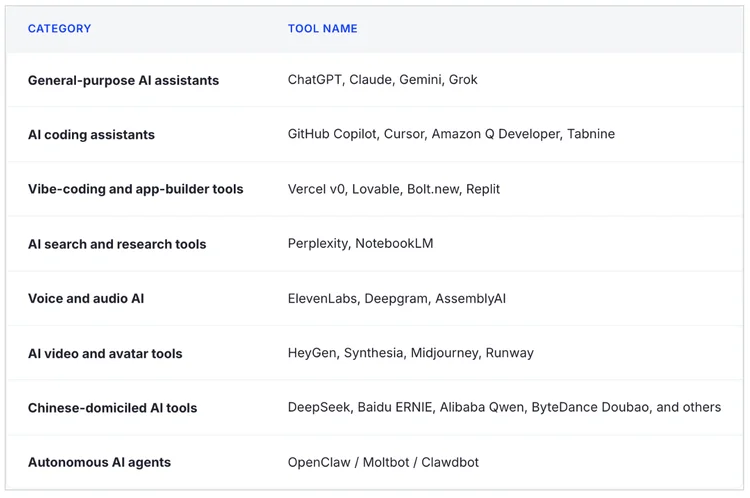
The lists offer valuable indicators that include IP addresses, CIDR ranges, and domains, each accompanied by risk scores and annotations that elucidate their service affiliations. This level of detail is not often found in standard threat feeds. Recorded Future provides two primary datasets: the general AI infrastructure list and a dedicated list focusing on Chinese AI infrastructure. Each encompasses a wide spectrum of AI tools, including general-purpose AI assistants, AI coding environments, content generation tools, and autonomous AI agents.
Implications for Security Teams
What does this all mean for security teams striving to navigate the murky waters of AI adoption? If you're working in this space, the introduction of AI Infrastructure Indicator Lists could signal a much-needed shift. The data provided might help improve visibility into AI activities, allowing teams to construct more effective strategies for risk management and compliance.
Yet, there’s a lingering skepticism about the effectiveness of such datasets. Recorded Future’s offering is certainly a step forward, but organizations need to contextualize this data within their specific environments. The idea of “shadow AI” becomes increasingly pertinent as these lists grow; without ongoing monitoring and adaptation of existing security frameworks, the real threats posed by unauthorized tool use could be ignored.
Moreover, threats from shadow AI won’t simply disappear. As more users adopt unsanctioned AI tools, the potential for data breaches increases. Organizations are urged to rethink their security policies to encompass these emerging technologies. That said, none of this negates the necessity for building a culture of security awareness. Employees must understand the risks that come with deploying unmonitored tools, especially when it comes to data handling and possible compliance violations.
Moving forward, leveraging these AI Infrastructure Indicator Lists should not only be about monitoring threats but should also serve as a basis for educating users on safe AI practices. After all, cybersecurity is not just the burden of the IT department; it requires buy-in from the entire organization, emphasizing that security is everyone’s responsibility.


